Brazilian vs European Portuguese: Which to Use in Brazil
Brazilian Portuguese and European Portuguese are two variations of the same language, but they are not interchangeable when it comes to reaching customers in Brazil. Many international companies already have websites, product descriptions, and marketing materials translated into Portuguese for the European market. However, using this content in Brazil without proper localization can limit search visibility, reduce engagement, and make a brand appear disconnected from its audience.
For companies entering the Brazilian market, choosing between Brazilian Portuguese and European Portuguese is not simply a matter of spelling or grammar. It is a strategic decision that affects SEO, Generative Engine Optimization (GEO), and how local buyers perceive a foreign business.
What is the difference between Brazilian and European Portuguese?
The main difference between Brazilian Portuguese (pt-BR) and European Portuguese (pt-PT) lies in vocabulary, pronunciation, sentence structure, and everyday expressions. Although speakers from both countries can generally understand each other, they do not always use the same words to describe products, services, and commercial activities.
These differences become particularly important in digital marketing because people search for information using the vocabulary they use in everyday conversations.
For example, a company selling industrial equipment might translate its website into European Portuguese and assume that Brazilian customers will find it naturally. However, if its product descriptions use terms that are uncommon in Brazil, the website may not match the search queries potential buyers actually enter into Google.
Here are some common vocabulary differences:
English | Brazilian Portuguese (pt-BR) | European Portuguese (pt-PT) |
|---|---|---|
Computer | Computador | Computador / Ordenador |
Cell phone | Celular | Telemóvel |
Bus | Ônibus | Autocarro |
Train | Trem | Comboio |
Refrigerator | Geladeira | Frigorífico |
Breakfast | Café da manhã | Pequeno-almoço |
Apartment | Apartamento | Apartamento |
Suit | Terno | Fato |
Juice | Suco | Sumo |
File | Arquivo | Ficheiro |
Some words are identical, while others have completely different meanings or levels of everyday usage. Even when Brazilian customers understand a European Portuguese expression, they may not use it when looking for a product or service.
For businesses, this distinction can influence everything from website traffic to lead generation.
Why does Portuguese localization for Brazil matter for SEO?
Search engine optimization depends on matching a website's content with the language and search behavior of its target audience. A technically correct translation does not necessarily meet this requirement.
Google evaluates several signals to understand what a page is about and whether it is relevant to a particular search. The vocabulary used in titles, headings, descriptions, and body content helps establish that relevance.
Consider a company that sells mobile devices and uses the European Portuguese term "telemóvel" throughout its website. Brazilian customers, however, are much more likely to search for "celular".
Even if Google understands that both terms refer to the same product, using the terminology preferred by Brazilian users helps align the content with local search intent.
This affects several SEO elements:
Keyword research: Search terms must reflect how Brazilian customers actually look for products and services, rather than relying on keywords from Portugal.
Title tags and meta descriptions: These elements should use familiar Brazilian expressions to improve relevance and encourage clicks.
Headings and content: H1, H2, H3, and body text should reflect local vocabulary and search intent.
Product descriptions: Technical specifications and commercial terminology must be understandable and recognizable to Brazilian buyers.
Internal linking: Anchor texts should follow the terminology used by the local audience.
Portuguese localization for Brazil also involves more than replacing individual words. Companies must consider regional expressions, industry-specific terminology, units of measurement, currency, and the way Brazilian businesses communicate.
A localized website is therefore more likely to connect with the searches that generate qualified traffic in the Brazilian market.
How does pt-BR vs pt-PT affect visibility in AI search?
The differences between Brazilian and European Portuguese also matter beyond traditional search engines. Generative Engine Optimization (GEO) focuses on improving a brand's visibility in AI-generated answers, including responses from ChatGPT, Gemini, and other generative platforms.
When a Brazilian buyer asks an AI assistant for recommendations, comparisons, or information about suppliers, the language and context of the query influence the response.
For example, someone searching for industrial suppliers might ask: "Quais são os melhores fornecedores de equipamentos industriais no Brasil?"
An AI platform may retrieve and prioritize sources that provide relevant information in Brazilian Portuguese and address the Brazilian market. A website written exclusively in European Portuguese may still be understood and cited, but it could miss opportunities to establish stronger contextual relevance.
This is particularly important for foreign companies competing against Brazilian businesses that already publish localized content.
To improve GEO performance, international companies should:
Use Brazilian terminology: Describe products and services using the expressions Brazilian customers recognize.
Provide local context: Include information about Brazilian industries, regulations, commercial practices, and market conditions.
Answer relevant questions: Create content that addresses the questions Brazilian buyers ask when researching suppliers.
Maintain consistent terminology: Use the same localized expressions across service pages, articles, and product descriptions.
Build local authority: Develop relevant content and digital mentions that strengthen the company's association with the Brazilian market.
AI visibility is not determined by language alone. Content quality, authority, relevance, and source credibility also matter. However, localization helps ensure that AI systems can better understand the relationship between a company's offering and the needs of Brazilian users.
Does European Portuguese affect how Brazilian buyers perceive a company?
Language is also an important part of building trust. When a Brazilian buyer visits a website filled with unfamiliar expressions, the company may appear distant from the local market.
This does not necessarily mean that the visitor will reject the supplier. In B2B transactions, technical expertise, pricing, certifications, and product quality remain essential. Nevertheless, communication plays a significant role in making the purchasing process easier.
A website that uses natural Brazilian Portuguese demonstrates that the company has invested in understanding its audience.
This becomes even more relevant when buyers are evaluating foreign suppliers. They may already have questions about delivery times, technical support, payment methods, warranties, and compliance with Brazilian requirements.
If the website communicates these details in familiar language, it reduces friction and makes it easier for potential customers to understand the company's value proposition.
Localization should therefore extend beyond the homepage. Contact forms, technical documentation, commercial proposals, FAQs, and customer support materials should follow the same language standards.
How can foreign companies adapt their websites for the Brazilian market?
Companies that already have a website in European Portuguese do not necessarily need to rebuild everything from scratch. In many cases, they can use their existing content as a starting point and develop a Brazilian Portuguese localization strategy.
The process should begin with an assessment of the current website and its organic search performance.
A practical localization strategy includes:
Audit existing content: Identify European Portuguese expressions, spelling differences, and terminology that may sound unnatural to Brazilian readers.
Research Brazilian keywords: Analyze how local customers search for the company's products, services, and industry-related solutions.
Adapt commercial pages: Rewrite product descriptions, service pages, headings, and calls to action using Brazilian Portuguese.
Review technical terminology: Consult professionals familiar with the Brazilian market to ensure that specialized vocabulary is accurate.
Optimize for SEO and GEO: Structure content around local search intent and provide useful answers to questions Brazilian buyers are likely to ask.
Monitor performance: Track organic traffic, keyword rankings, engagement, conversions, and visibility in generative AI platforms.
It is also important to configure the website correctly for international SEO. Companies maintaining separate versions for Brazil and Portugal should use appropriate URL structures, language targeting, and hreflang annotations, such as pt-BR and pt-PT, to help search engines understand which version is intended for each audience.
Reach Brazilian buyers with the right Portuguese localization strategy
Expanding into Brazil requires more than translating an existing website. Companies must understand how local customers search, communicate, compare suppliers, and make purchasing decisions.
The difference between Brazilian and European Portuguese may seem small in some situations, but it can have significant consequences for search visibility, AI recommendations, and customer confidence.
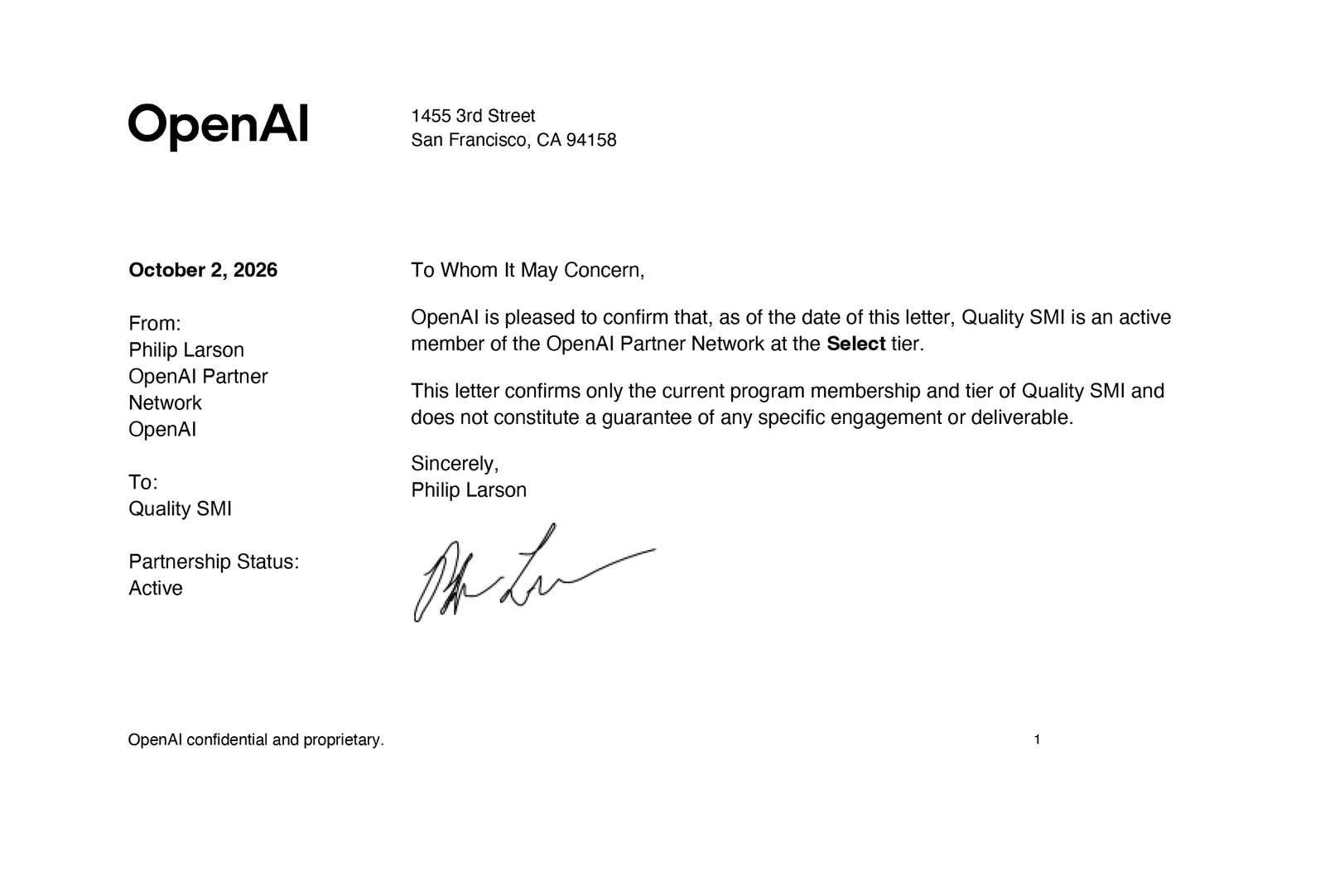
At Quality SMI, we help international companies strengthen their digital presence through SEO, GEO, and digital marketing strategies adapted to the Brazilian market. As a Google Partner and OpenAI Select Partner, our agency combines search engine optimization with strategies designed to improve brand visibility across traditional search engines and generative AI platforms.
If your company already has a Portuguese-language website but wants to reach Brazilian buyers, investing in proper localization is an important step toward building visibility, credibility, and qualified business opportunities in Brazil.